
Design More, Admin Less
Talking AI with the IALD at Enlighten Paris '26

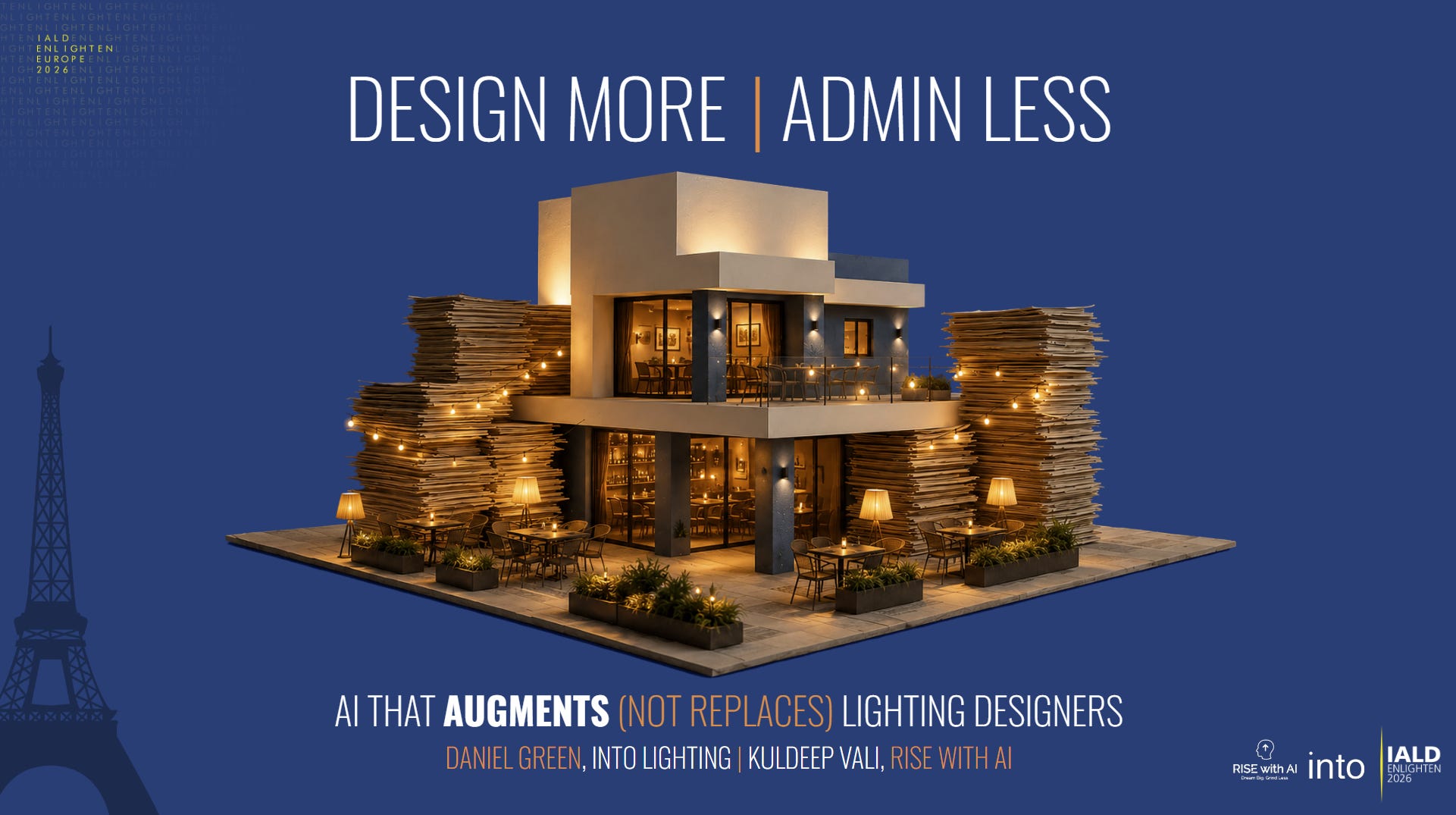
A few years ago, speaking about AI in a room full of designers often carried a certain tension.
You could feel the questions forming before the first proper example had even appeared. Is this going to replace us? Is this going to flatten taste? Is this going to flood the industry with glossy nonsense?
At IALD’s Enlighten 2026 talks, the mood was less defensive and more curious. The room seemed less interested in debating whether AI had a place at all, and more interested in understanding where it could genuinely help.
Our talk “Design More, Admin Less” aimed to move the conversation away from AI as a replacement for designers, and towards something that might clear some of the everyday clutter & mundanity.
Telling a lighting designer that AI can design a scheme for them is unlikely to land well. Good lighting design carries too much judgement for that claim to feel credible. It depends on taste, experience, restraint, technical understanding, project sensitivity, and a feel for people in space. It also depends on knowing when a beautiful image is lying.
The conversation becomes more useful when we talk about the work around the work.
The schedule formatting. The datasheet checking. The tender review. The first-pass project notes. The comparison of proposed substitutions. The endless extraction of useful information from PDFs. The rewriting of the same design intent in slightly different forms for different audiences. The admin loops that are necessary, while rarely feeling like the reason anyone became a lighting designer.
That is where the conversation becomes practical.
Most designers I know are seeking more time to think properly.
More time to test an atmosphere, and to understand a space. More time to sit with a drawing before the next meeting, instead of spending the afternoon wrestling a spreadsheet into shape.
This is where AI starts to make sense to me. It can reduce some of the drag around design work, and help clear space around judgement, craft and attention.
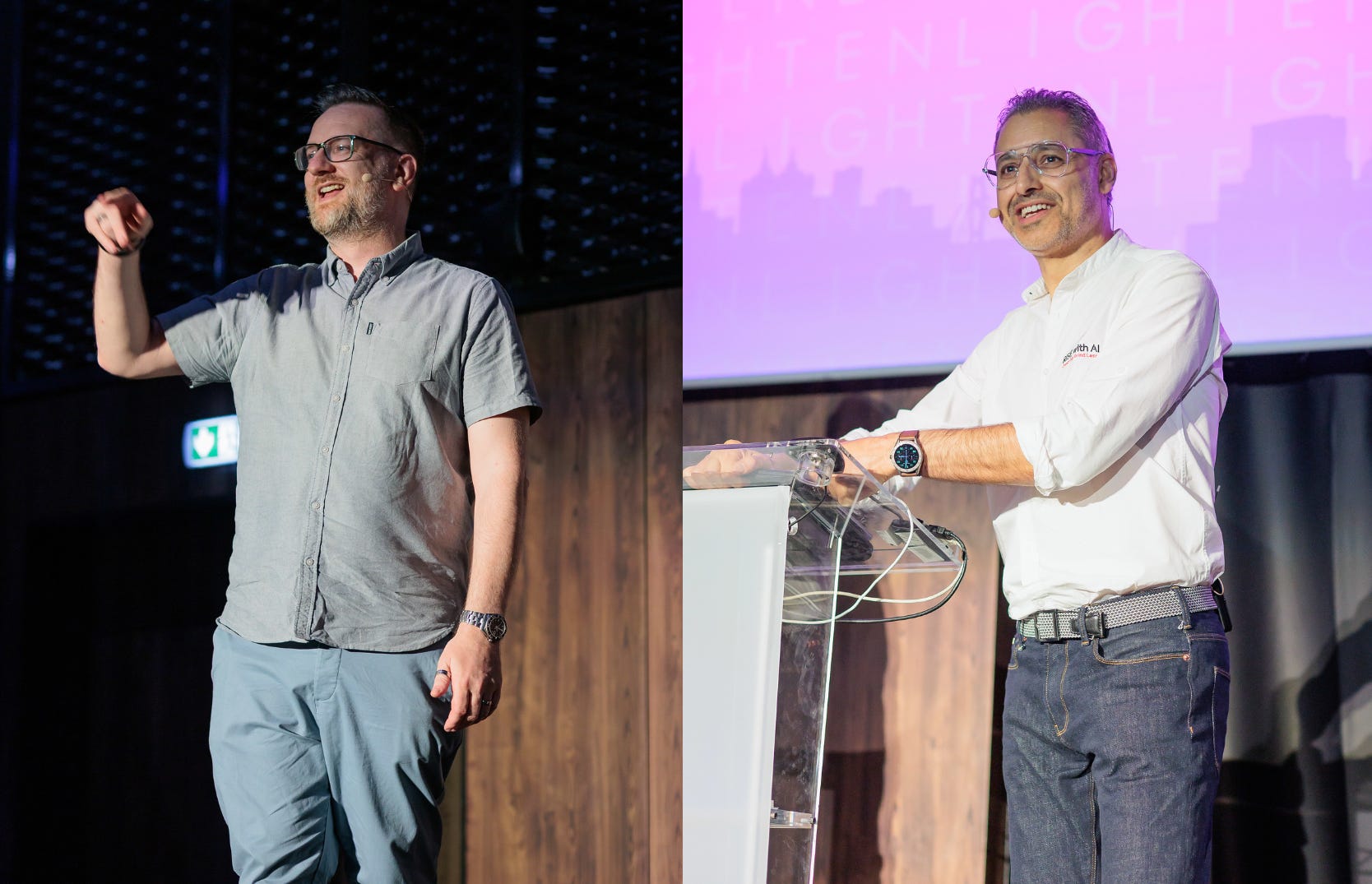
One of the ideas we spoke about was treating AI less like a magic box and more like a new colleague.
That comparison is useful because it immediately makes the problem more familiar. You would never bring a new person into a studio and say, “Do the hotel lighting,” with no context. You would show them the brief. You would explain the client. You would share examples. You would tell them how the studio writes, what the project risks are, what standards apply, what the architect cares about, and what must never be missed.
AI needs the same kind of direction.
A weak prompt is often just a weak brief. Lighting designers understand weak briefs better than most.
“Warm hotel lighting” is nowhere near enough. Warm where? A corridor, a spa, a lobby, a bar, a façade, a guestroom, a stairwell? Is the intention calm, domestic, theatrical, premium, minimal, heritage, cinematic, intimate? Are we worried about glare, maintenance, budget, energy, dimming, planning, spill, mock-ups, procurement, or all of it at once?
The more context you give, the more useful the output becomes. That sounds obvious, yet it is one of the reasons the industry’s attitude is shifting. People are beginning to see that poor AI results often say as much about the framing of the task as they do about the tool.
The tool still gets things wrong. It still invents. It still overreaches. Designers need to understand that clearly. They also have more control over the process than they might first assume.
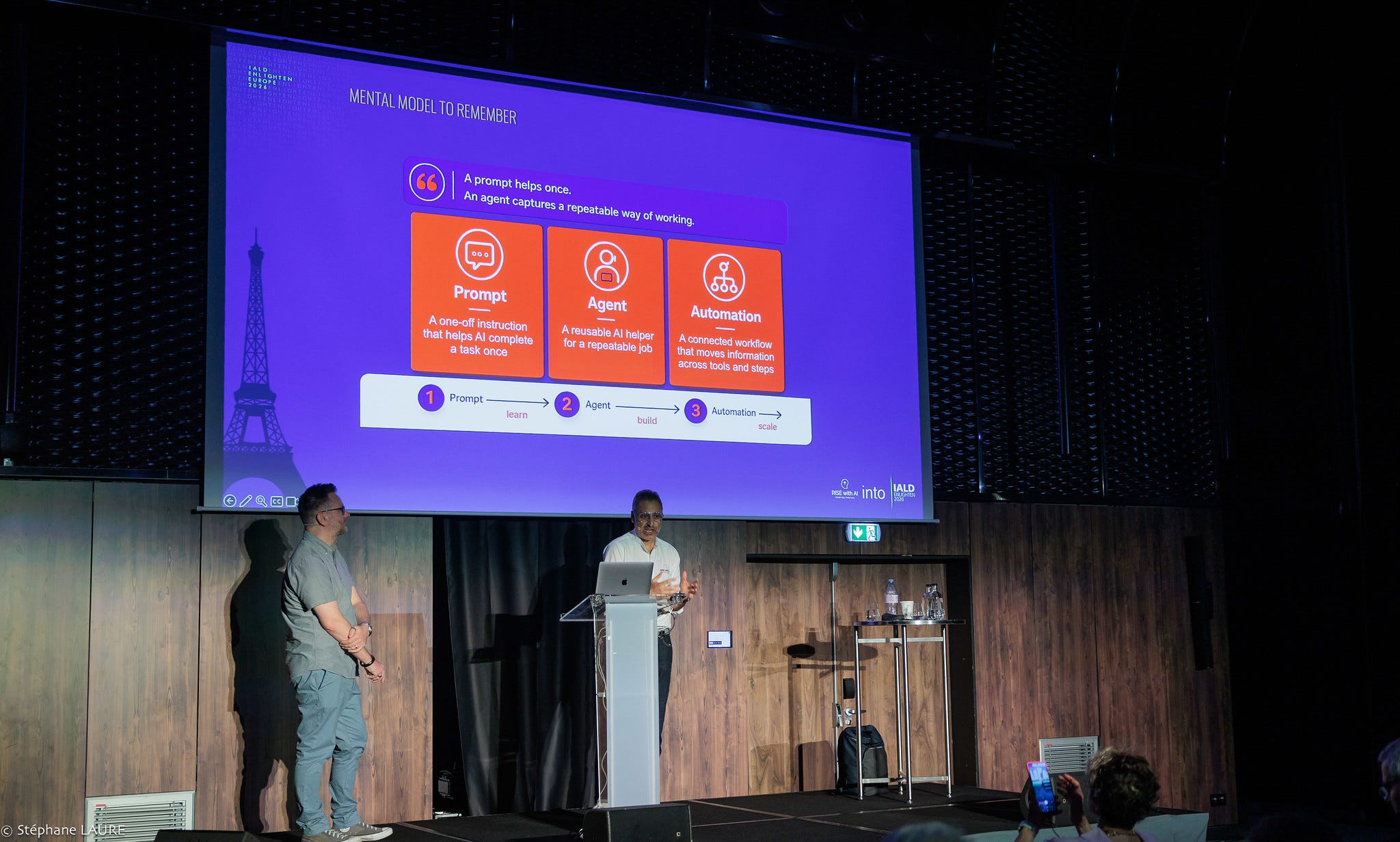
The conversation becomes even more interesting when you move beyond one-off prompts. A prompt helps once. A repeatable assistant helps with a task you do often. A workflow connects that task to other parts of the job.
For example, asking AI to summarise one datasheet is mildly useful. Building a repeatable way to extract luminaire data, compare it against a schedule, flag missing information and prepare a first-pass review starts to feel like a genuine change in practice.
The novelty phase was about playing with tools. The more useful phase is about building repeatable ways of working.
During the talk, we moved through examples of AI-assisted lighting renderings, node-based visual workflows, a hotel case study, luminaire schedule tools, spec sheet generation and the idea of an AI-first lighting studio. The phrase “AI-first” can sound uncomfortable, so it needs careful handling. To me, it means asking, at each stage of a project, whether there is a better way to handle the repetitive, text-heavy, comparison-heavy or admin-heavy parts of the process.
Where is the friction? What are the Pain Points?
A lot of friction in lighting design is unavoidable. Projects are complex. Buildings are messy. People change their minds. Budgets move. Products get substituted. Information arrives late. Coordination is never as clean as the programme suggests.
AI will never fix all of that. Used carelessly, it may create new problems.
However, what about copying information from one place to another? Reformatting the same notes? Searching through documents for something you know is there? Starting from a blank page every time you need a project framework, a risk register, a meeting summary or a design narrative?
Those are the places where AI can be genuinely useful.
The designer still has to decide what matters. The designer still has to test the output. The designer still has to know when something feels wrong. AI can draft, sort, summarise, compare and suggest. It cannot take responsibility for a project. It cannot understand the emotional quality of a room in the way a designer can. It cannot stand on site and sense that the lighting level is technically acceptable while the atmosphere feels dead.
That human layer remains the work. If anything, it becomes more valuable.
As the tools get faster, judgement becomes the bottleneck.
Taste becomes the filter. Responsibility becomes the thing that separates a useful workflow from a dangerous one.
This is why “learning AI” feels too vague as a goal. Lighting designers need to become better at briefing tools, questioning outputs, setting constraints, protecting project data and deciding what should remain human.
A more open attitude towards AI needs to come with a more responsible one. The risks are real. We need to be careful with confidential project information. We need to understand where uploaded data may go. We need to check standards, regulations and product claims. We need to label assumptions. We need to avoid passing off generated imagery as evidence of technical performance. We need to remember that a convincing visual is neither a lighting calculation nor a specification nor a buildable detail.
We also need to be honest about the sustainability of all this. Digital work can feel weightless, although it has a cost. Endless generation carries a hidden footprint behind the clean interface. The aim should be better decisions with less waste, rather than fifty versions produced because the button is easy to press.
Lighting designers already understand restraint. Good lighting is rarely about adding more light everywhere. It is about attention, contrast, hierarchy, shadow, comfort and timing. It is about knowing what to reveal and what to leave alone.
Perhaps our approach to AI should be similar. Use it where it improves the work. Keep it away from places where it only adds noise.
The lighting industry does not need to fall in love with AI.
Blind enthusiasm usually ends badly, especially in design. It leads to lazy images, lazy assumptions and tools being adopted before anyone has worked out what problem they solve.
There is a middle ground, and I think we are starting to enter it. A place where designers can be sceptical without being dismissive. Curious without being naïve. Experimental without handing over responsibility.
For me, that is what acceptance looks like. No applause for the machine. No belief that every workflow needs an AI layer. Just a willingness to ask better questions.
Where can this save time?
Where can it improve consistency?
Where might it help a smaller studio do something that previously required more resource?
Where could it make a designer more prepared?
Where is it likely to mislead us?
Where should we refuse it?
Those questions are more useful than asking whether AI is good or bad in the abstract. The answer will always depend on the task, the context, the data, the risk and the person using it.
I left Paris feeling optimistic because the conversation seemed to have moved into that more useful territory. The glare of hype has started to soften. The practical use cases are becoming easier to see. The fear has not vanished, although it has become more specific, and specific fears are easier to work with.
AI should never make lighting design cheaper, faster and worse.
Used badly, it absolutely could.
Used carefully, it may help remove some of the friction that keeps designers away from the work they are actually here to do: thinking about space, atmosphere, people and light.
Design more. Admin less.
- Thanks to Kasi & the team at IALD for the opportunity!

Dan | BloqDigital is a lighting designer and digital artist based in the UK, who writes about Art, Technology, AI and Culture.
Have any thoughts on this article? I’d love to hear them! Drop them in the post’s comments section and let’s talk about it.
Thanks so much for reading! If you really enjoyed this post, please consider sharing it with friends as this really helps us grow! Or you can subscribe to receive future posts.